
- June 3, 2026
- 355
- 2026 Guide
There’s a reason the breakfast smoothie has become the unofficial mascot of the modern morning routine. It’s fast, it’s portable, and when you build it well, it can deliver a genuinely balanced meal in the time it takes to find your car keys. But “when you build it well” is doing a lot of work in that sentence. The difference between a smoothie that fuels you until lunch and one that leaves you rummaging through the snack drawer at 10 a.m. comes down to a handful of principles that almost nobody explains.
This guide fixes that. We’ll walk through why a smoothie can be one of the smartest things you eat all day, the simple formula that turns a random blend of fruit into a complete breakfast, how to choose each ingredient, the mistakes that quietly sabotage your efforts, and ten reliable recipes you can rotate through all week. Whether you’re chasing steady energy, more vegetables, an easier morning, or simply something that tastes good and doesn’t require a fork, you’ll leave knowing exactly how to make it happen.
Why Start Your Day with a Breakfast Smoothie
Breakfast has a job to do. After seven or eight hours without food, your body is running on reserves, and the first meal sets the tone for your blood sugar, your focus, and your appetite for hours afterward. A thoughtfully built smoothie handles that job remarkably well, and it does so with a few advantages that a plate of toast or a granola bar simply can’t match.
The first advantage is density. In a single glass, you can fold together protein, fiber, healthy fats, and a serving or two of fruit and vegetables. Most people struggle to eat enough produce, and a smoothie is one of the easiest ways to close that gap without feeling like you’re choking down a salad before sunrise. A handful of spinach disappears entirely behind a banana and some berries, and you’d never know it was there.
The second advantage is speed and convenience. A smoothie takes five minutes to make and can be sipped on the commute, at your desk, or while you’re wrangling kids out the door. For people who routinely skip breakfast because they “don’t have time,” that portability can be the thing that finally makes a morning meal stick.
The third advantage is digestibility. Because the ingredients are already broken down by the blender, a smoothie tends to feel light in the stomach, which is useful first thing in the morning or before exercise when a heavy meal feels unappealing. That same quality, though, is exactly why the formula matters: a smoothie that’s all fruit and juice digests almost too quickly, spiking your blood sugar and dropping it just as fast. Build it right, and you get smooth, lasting energy instead.
How to Build a Balanced Breakfast Smoothie
If you remember nothing else from this guide, remember this: a great breakfast smoothie is built from a formula, not a recipe. Once you internalize the formula, you can open your fridge, see whatever happens to be in there, and build something balanced without measuring or searching for instructions. The formula has six components, and a complete breakfast smoothie usually includes at least four of them.
- A liquid. This is the base that gets everything moving in the blender. Think water, milk, a plant-based milk, or a smaller amount of juice. Start with about one cup and adjust from there.
- A creamy base. This is what gives the smoothie body and that satisfying milkshake texture. Frozen banana is the classic choice, but plain yogurt, an avocado, or rolled oats all work beautifully.
- A protein source. This is the single most overlooked ingredient and the one that separates a snack from a meal. Protein slows digestion, keeps you full, and blunts the blood sugar spike from the fruit. Greek yogurt, protein powder, silken tofu, milk, or a spoonful of nut butter all qualify.
- Fruit. Fruit brings sweetness, flavor, vitamins, and fiber. Berries, banana, mango, pineapple, and cherries are all reliable. This is where most people overdo it, so think of fruit as a flavoring rather than the entire meal.
- Vegetables. This is the secret ingredient that costs you almost nothing in flavor and pays you back in nutrients. Spinach and kale are nearly undetectable; cucumber, cauliflower, and even cooked, frozen zucchini blend in without a trace.
- A healthy fat or booster. A spoonful of chia seeds, ground flax, nut butter, or hemp hearts adds staying power, omega-3s, and a little extra fiber. Boosters like cinnamon, cocoa, ginger, or a pinch of sea salt round out the flavor.
A simple, balanced formula looks like this: one cup of liquid, half a frozen banana, a scoop of protein, a cup of frozen fruit, a big handful of greens, and a tablespoon of a healthy fat. Blend, taste, adjust. That’s the whole game.
Choosing Your Smoothie Ingredients Wisely
Within each category of the formula, the specific choices you make determine how the smoothie tastes, how it makes you feel, and how well it actually serves as breakfast. Here’s how to navigate each one.
Liquids
Your liquid is the easiest place to either save or spend calories and sugar. Water is the lightest, cheapest option and lets the other ingredients shine. Unsweetened plant milks like almond, oat, soy, and coconut add a little creaminess and flavor with modest calories; soy and pea milk also bring a useful protein boost. Dairy milk delivers protein and calcium and a naturally sweet, rich base.
Fruit juice is where caution comes in. It’s tempting because it makes everything taste sweet, but juice is essentially sugar without the fiber that whole fruit provides, and it’s easy to pour in far more than you’d ever eat. If you love the flavor, use a splash, not a cup, and lean on whole fruit for sweetness instead.
Protein
Protein is the backbone of a breakfast smoothie, and you have plenty of options. Plain Greek yogurt is a favorite because it’s thick, tangy, and packed with protein per spoonful. Protein powders, whether whey, casein, or a plant blend, offer the most concentrated boost and come in flavors that can carry an entire smoothie. Silken tofu disappears completely and lends a custardy texture. Cottage cheese, blended smooth, is having a well-deserved moment. Milk and nut butters contribute smaller amounts that add up. Aim to make protein a deliberate inclusion in every breakfast smoothie rather than an afterthought; it’s the difference between feeling satisfied at 10 a.m. and feeling ravenous.
Fruit
Frozen fruit is your best friend here. It chills and thickens the smoothie without watering it down the way ice does, and it’s often cheaper, picked at peak ripeness, and always in season. Berries are nutritional standouts, rich in fiber and antioxidants and relatively low in sugar. Bananas add creaminess and natural sweetness. Mango and pineapple bring a tropical brightness. Keep your total fruit to roughly one to one and a half cups so the smoothie doesn’t become a dessert.
Vegetables
Adding vegetables is the highest-leverage upgrade you can make. Baby spinach is the gateway green: a couple of handfuls vanish into any fruit-forward blend. Kale is more assertive but mellows with a sweet partner like pineapple. Frozen cauliflower is a genuinely magical addition, adding creamy thickness and fiber with zero flavor. Cucumber, celery, beets, and carrots can all play a role, especially in more savory or juice-style blends. Start small and increase as your palate adjusts.
Healthy Fats and Boosters
A little fat transforms a smoothie from a quick sugar hit into a meal that holds. Chia and flax seeds swell and thicken the drink while delivering fiber and omega-3 fats; flax is best ground so your body can absorb it. Nut and seed butters add richness and protein. Avocado makes a smoothie impossibly creamy. Beyond fats, flavor boosters do real work: cinnamon adds warmth and may help with blood sugar, cocoa powder turns any smoothie into a treat, fresh ginger brings zing, and a tiny pinch of salt sharpens every other flavor.
Common Breakfast Smoothie Mistakes to Avoid
Even with good intentions, it’s easy to turn a healthy concept into something that works against you. These are the missteps that come up most often.
- Treating it as all fruit and juice. This is the cardinal sin. A smoothie made of banana, mango, and orange juice can pack as much sugar as a soft drink, with little to slow it down. You’ll feel great for an hour and then crash. The fix is simple: add protein, fat, and greens to balance the sweetness.
- Forgetting the protein. Without protein, a smoothie is a snack, not a meal, and it won’t keep you full. If you find yourself hungry an hour after drinking one, this is almost always the reason.
- Going overboard on portions. Smoothies are easy to drink, which makes them easy to oversize. A breakfast smoothie doesn’t need to be a 32-ounce monster. A reasonable serving, built well, is plenty.
- Drowning the nutrition in sweeteners. Honey, maple syrup, agave, dates, and flavored yogurts all add sugar on top of the fruit that’s already there. Let ripe fruit do the sweetening, and add a sweetener only if you truly need it.
- Adding ice when frozen fruit would do. Ice waters down flavor as it melts. Freezing your fruit and even your greens gives you the same cold, thick texture while concentrating the taste.
- Drinking too fast. Because smoothies go down easily, it’s easy to gulp one in two minutes. Sipping more slowly gives your body time to register fullness and is gentler on digestion.
Equipment and Blending Technique
You don’t need a professional-grade machine to make a great smoothie, but a few technique tips will dramatically improve your results regardless of what you own.
A high-powered blender will pulverize frozen fruit, ice, and fibrous greens into a perfectly smooth texture, and if you make smoothies daily, it’s a worthwhile investment. That said, many standard blenders and personal bullet-style blenders do a fine job, especially if you give them a little help.
The biggest technique upgrade is layering your ingredients in the right order. Add your liquid first, then soft ingredients like yogurt and fresh fruit, then powders and seeds, and finally the frozen and hard items like frozen fruit and greens on top. This puts the liquid next to the blades, creating a vortex that pulls everything down and prevents the dreaded situation where the blender spins uselessly around a frozen clump.
Blend longer than you think you need to. A truly smooth smoothie usually takes 45 seconds to a full minute; stopping too early leaves grainy bits of seed and stubborn flecks of greens. If the mixture is too thick to move, add liquid a splash at a time; if it’s too thin, add more frozen fruit, a few ice cubes, or a spoonful of oats or chia and let it sit for a minute to thicken.
Meal Prep and Storage
The single best way to guarantee you’ll actually make a healthy breakfast on busy mornings is to remove the friction in advance. Smoothie meal prep is quick and pays off every single day of the week.
The most popular method is the freezer smoothie pack. Portion the dry, freezable ingredients for each smoothie, your fruit, greens, and any add-ins, into individual bags or containers and store them in the freezer. In the morning, you dump a pack into the blender, add your liquid and protein, and blend. You’ve turned a five-minute task into a one-minute one, and you’ve made it nearly impossible to skip.
You can also blend a smoothie the night before and store it in the fridge. It will keep well for about 24 hours in a sealed jar filled close to the top to limit air exposure. Some separation is normal; just give it a shake or a quick stir before drinking. A squeeze of lemon juice helps preserve the color and freshness. If you’ve added chia or flax, expect the smoothie to thicken overnight, which many people actually prefer.
For longer storage, you can freeze finished smoothies in jars or as pucks in a muffin tin, then thaw a portion in the fridge overnight. The texture won’t be quite as silky as fresh, but it’s a convenient backup for hectic weeks.
Ten Healthy Breakfast Smoothie Recipes
These ten recipes each follow the balanced formula, so every one of them works as a real meal. Treat the measurements as starting points and adjust the liquid and frozen fruit to reach your preferred thickness. Each makes one generous serving.
1. Classic Green Machine
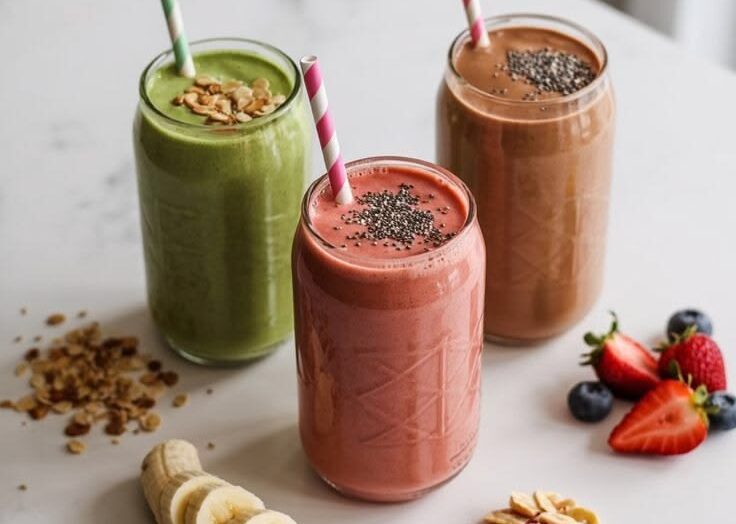
The gateway green smoothie that converts skeptics. Blend one cup of unsweetened almond milk, two handfuls of baby spinach, half a frozen banana, half a cup of frozen pineapple, a scoop of vanilla protein powder, and a tablespoon of almond butter. The pineapple and banana completely mask the spinach, leaving a bright, tropical drink that just happens to contain a serving of greens.
2. Berry Protein Powerhouse
A tart, antioxidant-rich option that keeps you full for hours. Blend one cup of milk of your choice, three-quarters of a cup of plain Greek yogurt, one cup of frozen mixed berries, a tablespoon of ground flaxseed, and a handful of spinach. The yogurt and flax provide a double dose of staying power, and the berries keep the sugar moderate.
3. Peanut Butter Banana
This one tastes like dessert and eats like breakfast. Blend one cup of milk, one frozen banana, two tablespoons of natural peanut butter, a scoop of chocolate or vanilla protein powder, a tablespoon of cocoa powder, and a pinch of salt. Rich, satisfying, and a favorite with kids and adults alike.
4. Tropical Sunrise
Bright and refreshing for warm mornings. Blend three-quarters of a cup of coconut water, half a cup of frozen mango, half a cup of frozen pineapple, a quarter of an avocado, the juice of half a lime, and a scoop of vanilla protein. The avocado adds creaminess and healthy fat that the tropical fruit alone would lack.
5. Chocolate Cherry Recovery
Ideal after a morning workout. Blend one cup of milk, one cup of frozen dark cherries, a scoop of chocolate protein powder, a tablespoon of cocoa, a tablespoon of chia seeds, and a handful of spinach. Cherries and cocoa pair beautifully, and the protein and chia support recovery and fullness.
6. Creamy Oats and Cinnamon
Essentially oatmeal you can drink. Blend one cup of milk, a third of a cup of rolled oats, half a frozen banana, three-quarters of a cup of plain Greek yogurt, a tablespoon of almond butter, half a teaspoon of cinnamon, and a pinch of salt. The oats add fiber and a hearty, breakfast-cereal flavor that feels deeply comforting.
7. Cauliflower Vanilla Dream
The recipe that proves vegetables can hide anywhere. Blend one cup of unsweetened almond milk, half a cup of frozen cauliflower, half a frozen banana, a scoop of vanilla protein, a tablespoon of almond butter, and half a teaspoon of vanilla extract. The cauliflower adds creamy body and fiber with absolutely no detectable flavor.
8. Mango Turmeric Glow
A gently spiced, anti-inflammatory blend. Blend three-quarters of a cup of coconut milk, one cup of frozen mango, a quarter teaspoon of ground turmeric, a small piece of fresh ginger, a scoop of vanilla protein, and a tablespoon of chia seeds. A crack of black pepper helps your body absorb the turmeric.
9. Strawberry Beet Brightener
Earthy, sweet, and a striking shade of pink. Blend one cup of water or milk, one cup of frozen strawberries, a quarter cup of cooked, frozen beets, three-quarters of a cup of plain Greek yogurt, and a tablespoon of ground flax. Beets bring a subtle sweetness and a dose of nitrates that support circulation.
10. Coffee Oat Energizer
For people who want breakfast and their coffee in one glass. Blend three-quarters of a cup of cooled brewed coffee, half a cup of milk, half a frozen banana, a third of a cup of rolled oats, a scoop of chocolate or vanilla protein, and a tablespoon of almond butter. It’s smooth, lightly caffeinated, and surprisingly filling.
Tailoring Your Smoothie to Your Goals
The beauty of the formula is that you can nudge it in different directions depending on what your morning demands.
For steady, all-morning energy, prioritize protein, fat, and fiber, and keep fruit moderate. The oats-and-cinnamon and green machine recipes are ideal. Slow-digesting ingredients like oats, chia, and nut butter flatten out your blood sugar so you avoid the mid-morning slump.
For post-workout recovery, lean into protein and carbohydrates and don’t be shy with the fruit. Your muscles can use the quicker-digesting carbs after exercise, and the protein supports repair. The chocolate cherry and coffee oat blends fit the bill.
For getting more vegetables in, make greens or cauliflower a standing ingredient in whatever you blend. Because they disappear so easily behind fruit, you can build the habit without ever tasting a vegetable, which is especially useful for picky eaters and children.
For kids, keep the flavors familiar and fun, use a little less greens at first, and let them help choose ingredients and press the button. The peanut butter banana smoothie is an almost universal crowd-pleaser, and serving it with a colorful straw goes a long way.
For a lighter morning, when a full meal feels like too much, dial back the creamy base and fat slightly and let the fruit and a modest scoop of protein lead. Even a lighter smoothie should keep some protein so it doesn’t leave you hungry.
Frequently Asked Questions
Are breakfast smoothies actually healthy?
They can be excellent or counterproductive depending entirely on how you build them. A balanced smoothie with protein, fiber, healthy fat, and a sensible amount of fruit is a genuinely nourishing meal. A smoothie that’s mostly fruit and juice behaves more like a sugary drink. The formula in this guide keeps you firmly in the first category.
Can a smoothie really replace a full breakfast?
Yes, as long as it includes enough protein and fat to keep you satisfied. The most common reason people feel a smoothie “doesn’t fill them up” is that it lacked protein. Build it as a meal and it eats like one.
Will the fruit make me consume too much sugar?
Whole fruit comes packaged with fiber, water, and nutrients, which is very different from added sugar. Keeping fruit to about one to one and a half cups and pairing it with protein and fat keeps the overall blend balanced. The problem is rarely the fruit itself; it’s juice, sweeteners, and oversized portions.
Is it better to drink a smoothie or eat my food?
Both have their place. Chewing whole foods promotes fullness and is great for daily eating. Smoothies win on convenience, on packing in produce, and for times when a lighter, faster meal suits you better. There’s no need to choose one forever; use whichever fits the morning.
Can I prep smoothies ahead of time?
Absolutely, and you should. Freezer smoothie packs cut your morning prep to almost nothing, and a blended smoothie keeps in the fridge for about a day. Prepping is the single most reliable way to make the habit stick.
Final Thoughts
A healthy breakfast smoothie isn’t about chasing the perfect superfood recipe or owning the most expensive blender. It’s about understanding one simple, flexible formula: a liquid, a creamy base, a protein, some fruit, a handful of vegetables, and a healthy fat or booster. Master that, and you can walk up to any fridge, anywhere, and build a balanced meal in minutes without a recipe in sight.
Start with one of the ten recipes above that sounds good to you, pay attention to how it makes you feel a couple of hours later, and adjust from there. Maybe you need more protein, maybe a little less sweetness, maybe an extra handful of spinach you’ll never even taste. Over a week or two, you’ll land on two or three go-to blends that fit your taste and your mornings perfectly. From there, the healthy breakfast practically makes itself, which is exactly the point. Here’s to better, brighter, easier mornings, one glass at a time.